It's late and you're sitting up in bed writing a message. It started as one line. Something small happened this evening and you want them to know it bothered you. That's all you wanted to say.
You're now on the fourth paragraph.
The first explains what happened. The second explains why it bothered you, in case they think it shouldn't have. The third explains that you're not trying to start a fight, that you know they had a long day, that you're probably being a bit sensitive. The fourth explains the first three. Somewhere in the middle, the actual point has drowned.
You send it. They read it. They're not typing. So you send a fifth, explaining that the first one came out wrong.
The reply comes at quarter past twelve: ok, can we talk tomorrow.
Explaining isn't the problem
Explaining is one of the best things people do. You tell someone why you feel what you feel and you're closer for it. Overexplaining is explanation that has stopped serving the conversation and started serving your fear. It usually comes in five forms, and they often travel together.
- Justifying. They ask are you coming Friday? and get a case file: the full week, the promise to yourself, the messy apartment, the cold you might be getting. They wanted a yes or a no.
- Defending. Justifying with the volume up, set off by even faint criticism. Oh, you changed the font, and you're explaining before they finish. They might have been about to say they liked it.
- Pre-empting. Answering every objection before anyone raises it. I know this sounds selfish, and I know you've got a lot on, and I'm not saying it's your fault. You're arguing with someone who isn't in the room.
- Apologizing. The reflex kind. Sorry, quick question. Sorry this is so long. Sorry to bother you. Each one is tiny. Across a day they say something loud: I know I'm taking up space and I'd like to apologize for it in advance.
- Over-detailing. The train delay, the platform change, the man with the bicycle, when they only needed to know you'd be ten minutes late.
You'll recognize yourself if your messages are longer than the ones you get back, if people reply only to your last line, or if you've ever said sorry, I'm overexplaining and then kept going.
Why it does the opposite of what you want
You overexplain so you'll be understood, believed and accepted. It reliably makes all three less likely.
Every reason is a handle. I can't come Friday leaves little to discuss. I can't come Friday because I'm tired, my place is a mess and I have an early start hands them three things to grab. It's only a couple of hours. Your place can wait. What time's your start? You meant to close the question and opened a debate.
It makes you sound unsure. Confident statements tend to be short. Wrapped in qualifications and apologies, the listener hears the anxiety, not the content, and responds to it, pushing a little or reassuring you when you didn't need it. A short statement says this is settled. A long one says this is still open, please weigh in.
It exhausts both of you. A five-paragraph message at midnight asks a lot of someone. The short, flat reply often isn't indifference; it's overwhelm. Then the short reply sets off your alarm, and you write more.
It hands over your authority. Justifying a decision at length quietly asks the other person to approve it. Send your sister seven reasons for the armchair you bought with your own money, and you've invited her to judge them.
If I explain it well enough, they'll have to accept it. They don't have to accept it, and I don't need them to.
Before you send anything that matters, count the reasons you're giving. It usually needs one, or none. Declining something rarely needs a reason at all, though one kind, true one is fine. Anything beyond that isn't context. It's ammunition.
The three-pass edit
Most things worth saying fit in one or two sentences, and the short version is almost always stronger because the point stands on its own where it can be seen. Before sending a message that matters, go through it three times.
- Cut the apologies. Every sorry, I know this is a lot, hope this is ok, unless you've actually done something wrong.
- Cut the defenses. Every sentence answering an objection nobody has made. If they have one, they'll raise it.
- Cut the forecasts. Every you'll probably think this is silly. You're telling them how to react before they've heard you, and often planting the very reaction you fear.
Here's a message before:
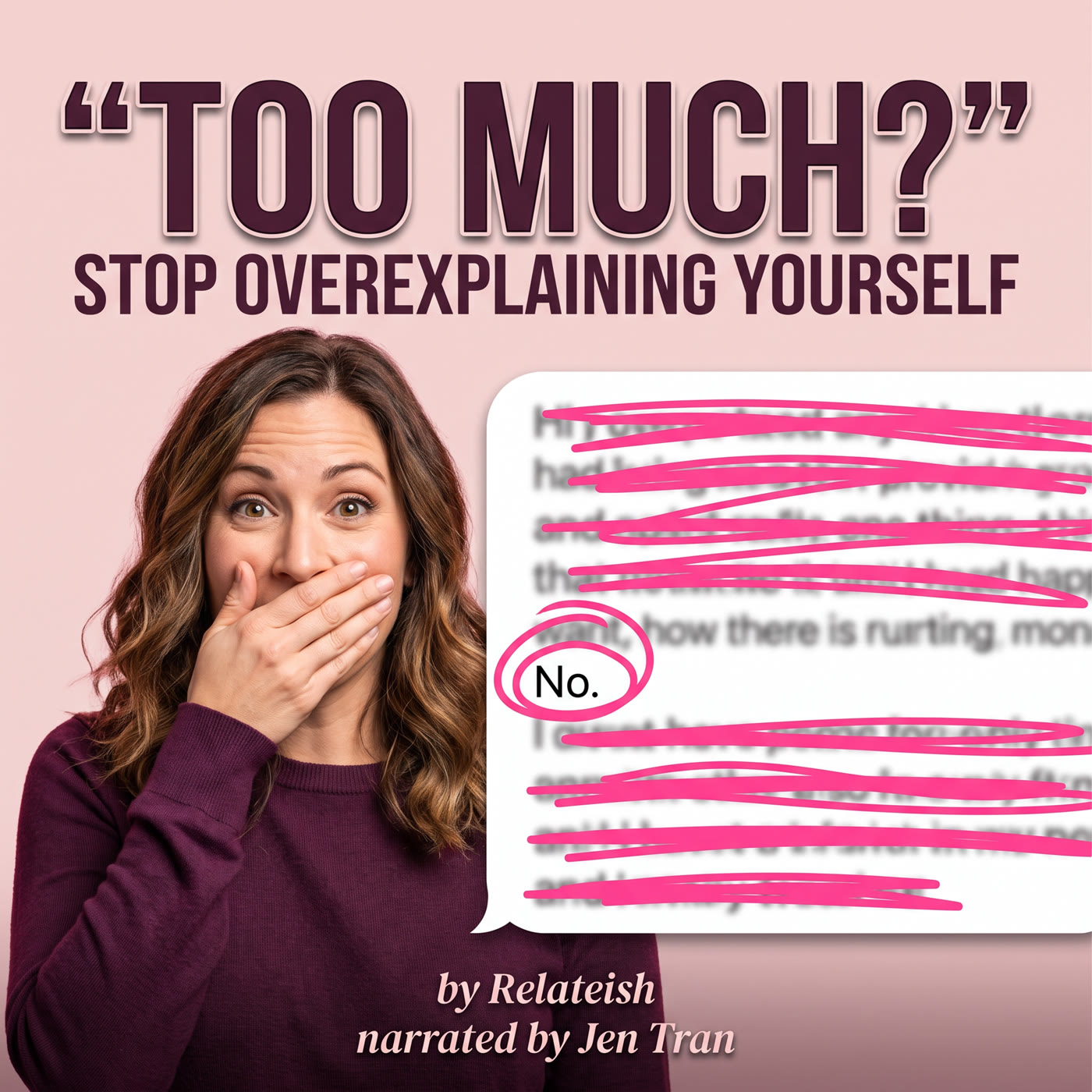
Hey, sorry, I know this is probably nothing and I don't want to make it a big thing, and I know you've had a stressful week, but I felt a bit hurt that you didn't ask about my presentation today, because I'd told you how nervous I was, and I know you probably just forgot, which is totally fine, sorry, ignore me if this is annoying.
And after:
I felt a bit hurt that you didn't ask about my presentation today. I'd told you how nervous I was.
Two sentences, and they aren't cold. They're more vulnerable than the long version, which was hiding behind its padding. That takes more courage, and it's far more likely to get a kind reply.
Short doesn't mean no context
Cutting the padding isn't the same as saying nothing. Some things do deserve a reason: a big decision that affects someone, a feeling they need to understand, an apology for something you actually did. The question is whether a sentence is giving them information, or giving your fear something to hide behind.
A good test: would this sentence still be here if I weren't worried about how they'll react? If yes, keep it. If it's only there to pre-empt an objection, defend yourself before you're accused, or apologize for taking up space, it can go.
Stop Overexplaining Yourself goes further: where the habit starts, how to apologize properly when you have done something wrong, what to say when someone keeps asking why, and how to let a harmless misunderstanding stand.