Your partner asks if you can skip your friend's birthday dinner for their work thing. It's the third time this month you've rearranged your plans around theirs. You feel the tightness in your chest. And you hear yourself say, yeah, of course, no problem.
Later, alone, you replay it. Why did I say that? You meant to say no. You'd even practiced. But in the moment, with their face hopeful and the silence stretching, yes came out before you could stop it.
Most advice about boundaries focuses on the words. The words matter. But for most people who struggle with this, the problem isn't knowing what to say. It's two specific moments: the second you're asked, and the half hour after you say no.
Why yes comes out so fast
People who find boundaries hard usually learned somewhere along the way that saying no was risky. Maybe someone sulked, or went cold, or made you feel responsible for their mood. So a rule got written: keep people happy, keep things smooth.
That rule lives in speed. When someone asks you for something, there's a small, uncomfortable gap between the question and your answer. For a people-pleaser, that gap feels almost unbearable. Your nervous system wants it closed, and the fastest way to close it is yes.
Which means the most powerful change usually isn't learning to say no. It's learning not to answer straight away.
Four words
The book's tool for this is simple: Let me check first.
That's it. It works with a partner, a boss, a parent, a friend. It's polite. Nobody is offended by it. And it gives you the one thing you never have in the moment of being asked: time to find out what you actually want.
Add a time so it's a promise, not a dodge. Let me check first. I'll tell you tonight. Then keep the promise.
Once you're alone, the social pull fades and you can ask the real questions. Do I want to do this? Can I do it without resentment? What would I be saying no to by saying yes? Sometimes the answer turns out to be yes. And it's a better yes, because it's yours.
If someone won't give you even a few hours to think about a request, that tells you something about the request.
The short no
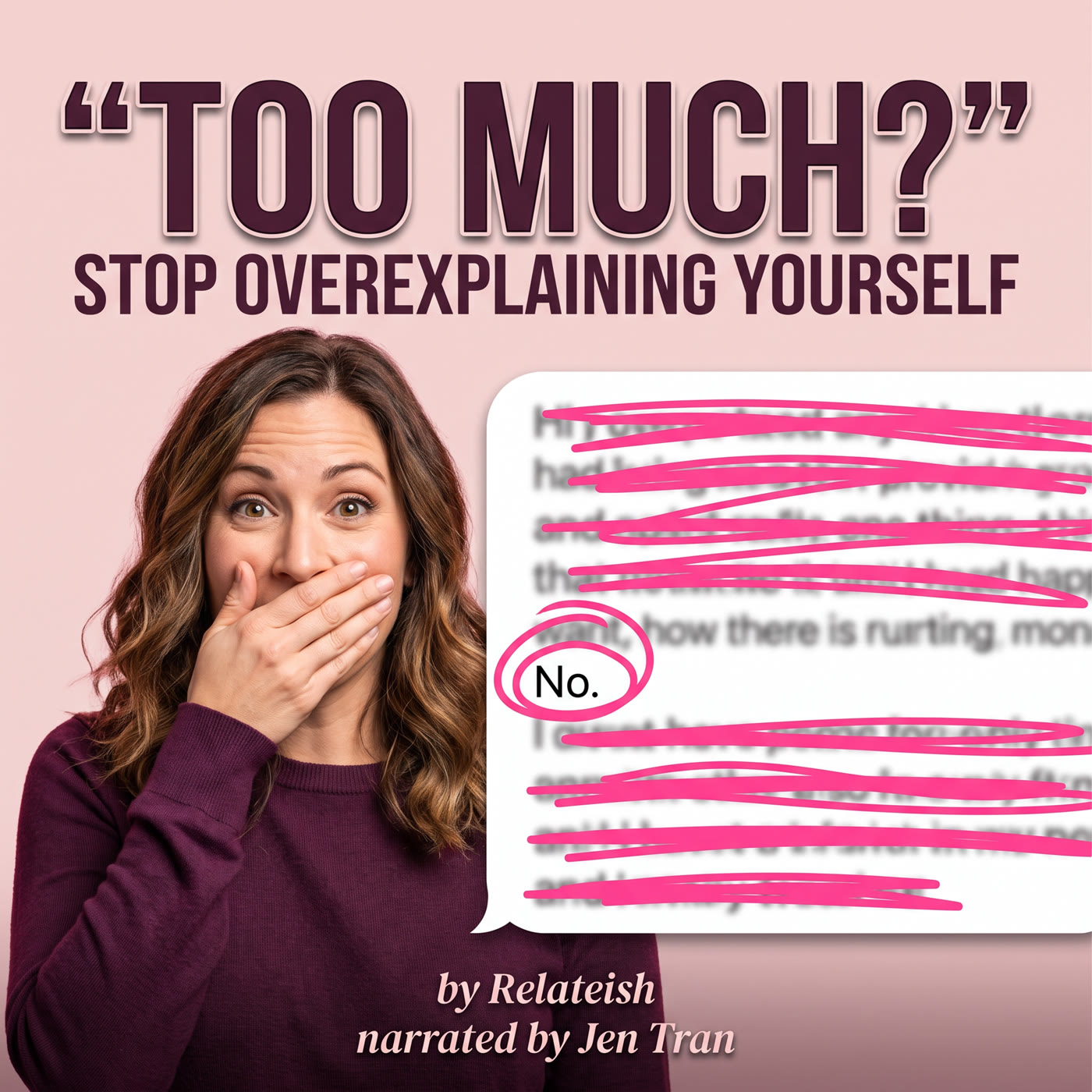
When people who struggle with boundaries finally say no, they tend to say it at enormous length. Apologies, reasons, offers to make up for it, more apologies. By the end, nobody is sure what the answer was.
Every reason you give is a door you're holding open. I can't, I'm tired invites it won't take long. I have plans invites can't you move them? Reasons invite negotiation.
So the shape to learn is Warm, Clear, Done.
- Warm: one small sign you care.
- Clear: the no itself, in plain words.
- Done: you stop.
In a relationship, it sounds like this:
- I know this dinner matters to you, and I hope it goes great. I'm not going to miss Sam's birthday, though.
- I love spending time with you. I need Sunday to myself this week.
- I hear you. I'm not okay with you reading my messages.
Notice what's missing: I'm so sorry, I feel terrible, maybe, because. Sorry is for when you've done something wrong. Saying what you need isn't wrong.
And notice I'm not going to rather than I can't. "Can't" suggests you would if only you were able, which invites your partner to solve the problem for you. "I'm not going to" is honest that it's a choice. It's harder to say and much harder to argue with.
A boundary isn't a wall you build around yourself. It's a sentence you say once, kindly, and then don't take back.
The half hour afterward
Here's the part almost nobody prepares you for. You've said it. You were warm and clear and you stopped. And about ten seconds later, it arrives: the wave of guilt. Heat up your neck. The urge to send one more message, to soften it, to offer something.
This is where most boundaries actually fail. Not when you say them, but in the thirty minutes after.
The book calls this feeling the Aftertaste, and the trick is to name it. This is the aftertaste. Hand flat on your chest. Breathe out slowly, longer out than in. Remind yourself that you disappointed someone, and you didn't harm them. Then do something else with your hands for at least half an hour. Don't reread the conversation. Don't check if they replied.
The wave is expected. It doesn't mean you got it wrong. If you've said yes on reflex for years, your body has years of evidence that no is dangerous. One calm no won't overwrite that. But the wave does pass, usually within the hour, and a little faster each time.
When your partner pushes back
How someone responds to a boundary tells you a lot.
Ordinary disappointment sounds like oh, that's a shame or are you sure? That's a person having a feeling. Meet it kindly and stay where you are: I know, I'm sorry it's disappointing. I'm still not able to.
Negotiation sounds like what about just the first hour? Because your no was short, there are no reasons to pick apart. Repeat yourself in nearly the same words, as many times as you need. That isn't stubborn. It's consistent.
A guilt trip sounds like after everything I've done for you or fine, I know where I rank. It tries to turn your no into a moral failure. You can name it gently: I can hear you're upset, and I'm still saying no.
Most people who push back aren't bad. They're just used to hearing yes, and they settle once they see you're steady. But if pushback turns into shouting, long punishing silences, threats, or anything that makes you afraid, that's no longer disappointment. That's control, and it deserves real support from people trained to give it.
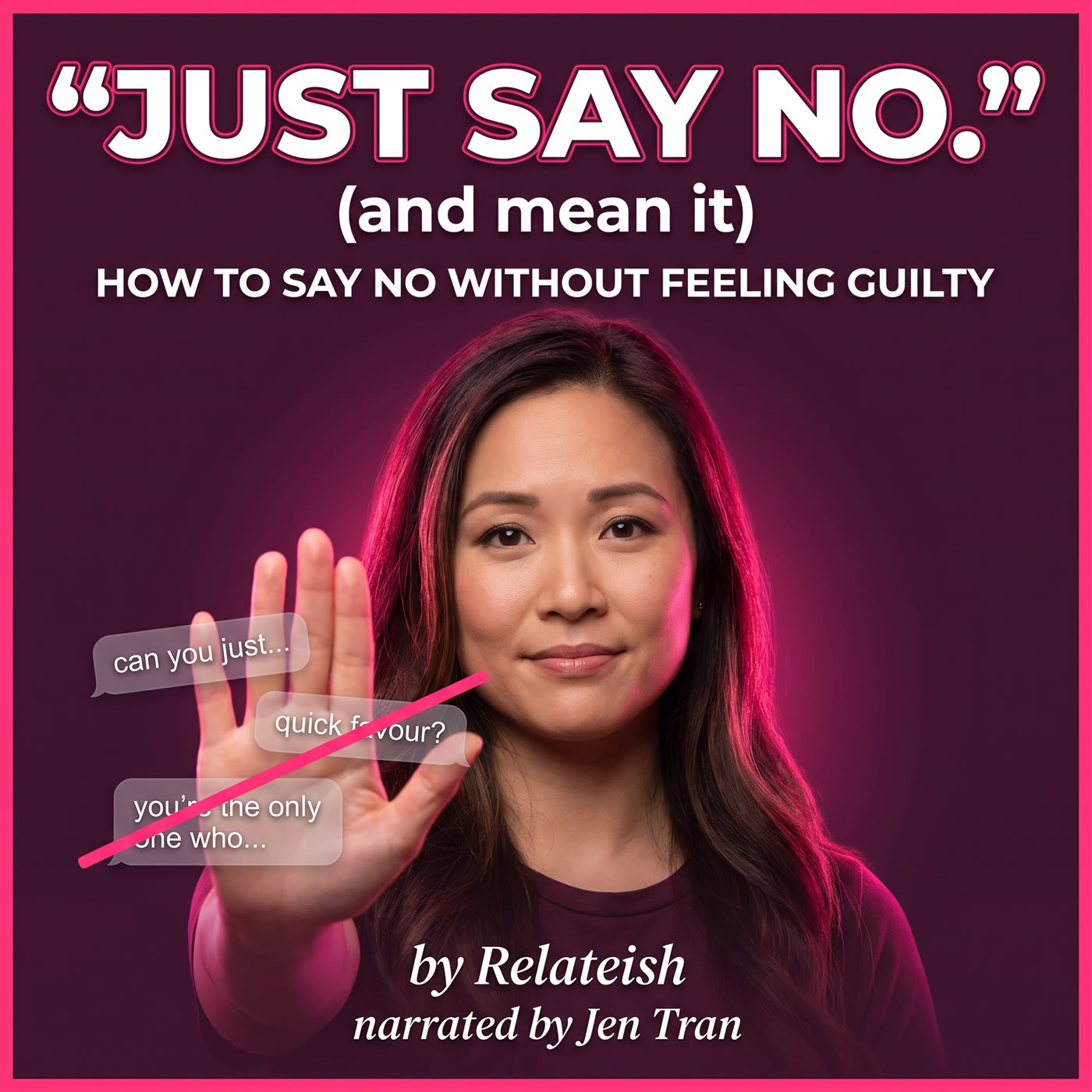
How to Say No Without Feeling Guilty goes through all of it: why no feels dangerous, the difference between feeling guilty and being guilty, the four words, the short no, the pushback, and how to say no to the people you love most.