You weren't looking for it. You opened the app to check something else, and there it was at the top of the row: their story. Two coffee cups on a café table. Lipstick on one rim. A hand at the edge of the frame wearing a ring you don't recognize.
Everyone who has ever been passed over knows what a soft launch looks like. And now you're doing what you swore you wouldn't. Her profile. Photos from two summers ago. Zooming in. Her hair, her friends, her apartment, her vacation in the mountains. And the question that has been sitting in your chest for weeks:
What does she have that I don't?
What you're feeling makes complete sense. Being left is painful. Being left for someone is a particular kind of pain, because it doesn't only take the person away. It seems to hand down a ruling. There was a choice, and it wasn't you.
Why being passed over hurts this much
Most heartbreak is about absence. Being passed over adds ranking. It doesn't feel like a door closing; it feels like a panel met and the results came back, and you came second.
That has deep roots. Humans evolved in small groups where being included was a matter of survival, and research on social rejection suggests being left out activates some of the same brain circuits as physical pain. The ache when you see the two cups is your nervous system reporting an injury.
Some of us are also more sensitive to rejection than others: quicker to expect it, quicker to see it, hit harder when it comes. If love has always felt a little conditional, being passed over doesn't land as an event. It lands as confirmation of the thing you always feared about yourself.
The two sentences
Here's the most important idea, and it's worth carrying everywhere. There are two sentences that sound almost the same.
- I was not chosen.
- I was not worth choosing.
The first is a fact. Someone with their own history, fears, timing and preferences made a decision, and the decision wasn't you. It hurts, and you don't have to pretend otherwise.
The second is a conclusion. It turns the fact into a measurement of your value, with no evidence at all.
A person's choice tells you a great deal about them, and very little about the one they didn't choose.
Think about choices you've made. The apartment you didn't take. The perfectly lovely person you went on three dates with and couldn't feel anything for. Were they worthless? Of course not. You chose for reasons about you: your budget, your mood that year, what you were afraid of. Their choice is information about them.
Try it now. Say the first sentence silently, with their name in it. Notice how it feels: sad, probably, and heavy. Then say the second. It usually lands lower, in the stomach, with shame in it. That shame is the signal. Whenever you feel it, you've slid from the first sentence into the second.
When one choice becomes your whole life
The quiet thought I'm always the one people don't pick is where the second sentence does its worst damage. It takes one person's choice and stretches it backwards over decades: the friend who drifted, the ex at twenty-four, the promotion that went to someone else. Suddenly it's a pattern, and the pattern is you.
Look at what happened there. Your mind went hunting through your past for evidence for a verdict it had already reached. That isn't reasoning. It's a prosecution, and nobody is speaking for the defense.
The grief nobody makes room for
There's a second weight that often comes with this. When a marriage ends, people bring food. When something that was never quite official ends, there's nothing. People say well, you weren't really together, were you, and you nod, and go home, and cry in the bath.
Grief that the world doesn't recognize is still grief, and it comes with a double load: the loss itself, and the sense that you're not entitled to it. You may be mourning plans that were never said out loud, a trip mentioned once in passing, a future you were quietly building in your head. You're grieving a house only you could see.
It mattered whatever it was called. One small thing that helps: tell one person, plainly, this mattered to me, it's over, and I'm sad. Not the whole saga, not an analysis of their messages. Grief heals faster when someone sees it.
The story you tell about yourself in love
Being passed over has a way of waking up an old story and putting it in charge. For some people it's I'm too much. For others, I'm not enough. And for a great many, a version that belongs to this exact wound: I'm the one before the real one. The practice relationship. The person someone's with while they wait for who they actually want.
Most people who carry that story keep a few pieces of evidence on file: the ex who married the next person within a year, the one who said they weren't ready and was engaged by Christmas. Each of those things happened. None of them proves the story. The story just uses them, the way a lawyer picks exhibits, and leaves out everything that doesn't fit.
The story also has a hidden cost. If you believe you're the one people don't choose, you'll behave in ways that make choosing you less likely. You won't ask what you are. You won't say you're hurt when they cancel. You'll accept the Thursday nights and no labels because you're grateful for anything and afraid that asking for more will end it. Then, when it ends anyway, the story says see, I told you.
Try writing a second draft, the way a fair friend who saw everything would tell it: what it says about them, what you did well, and what you'd honestly do differently. It's not a pep talk. It's just a more complete account of something that happened between two people.
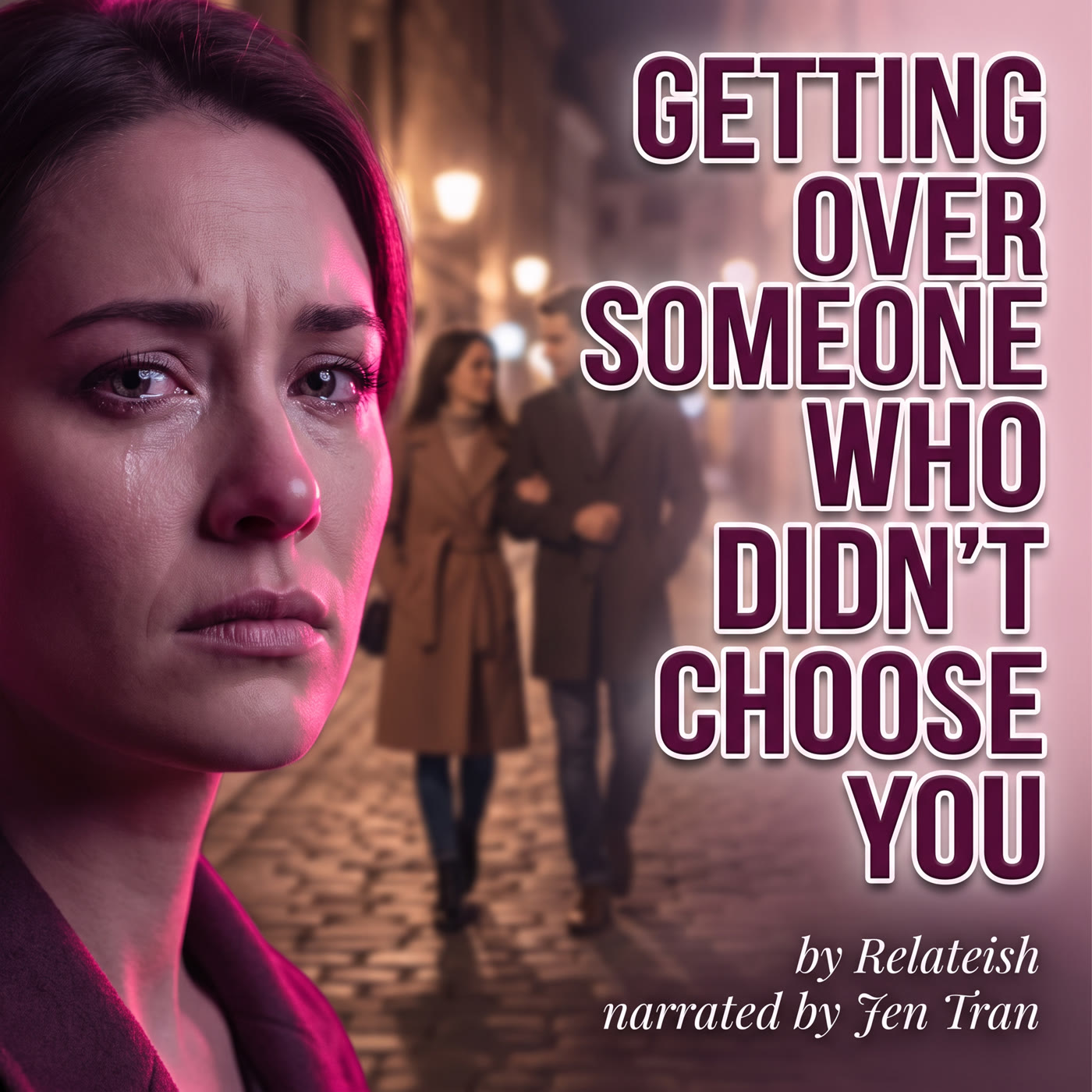
Getting Over Someone Who Didn't Choose You goes further: what to do with the comparison at one in the morning, how to rewrite the story you tell about yourself in love, and what to do with the daydream of the day they realize what they lost.