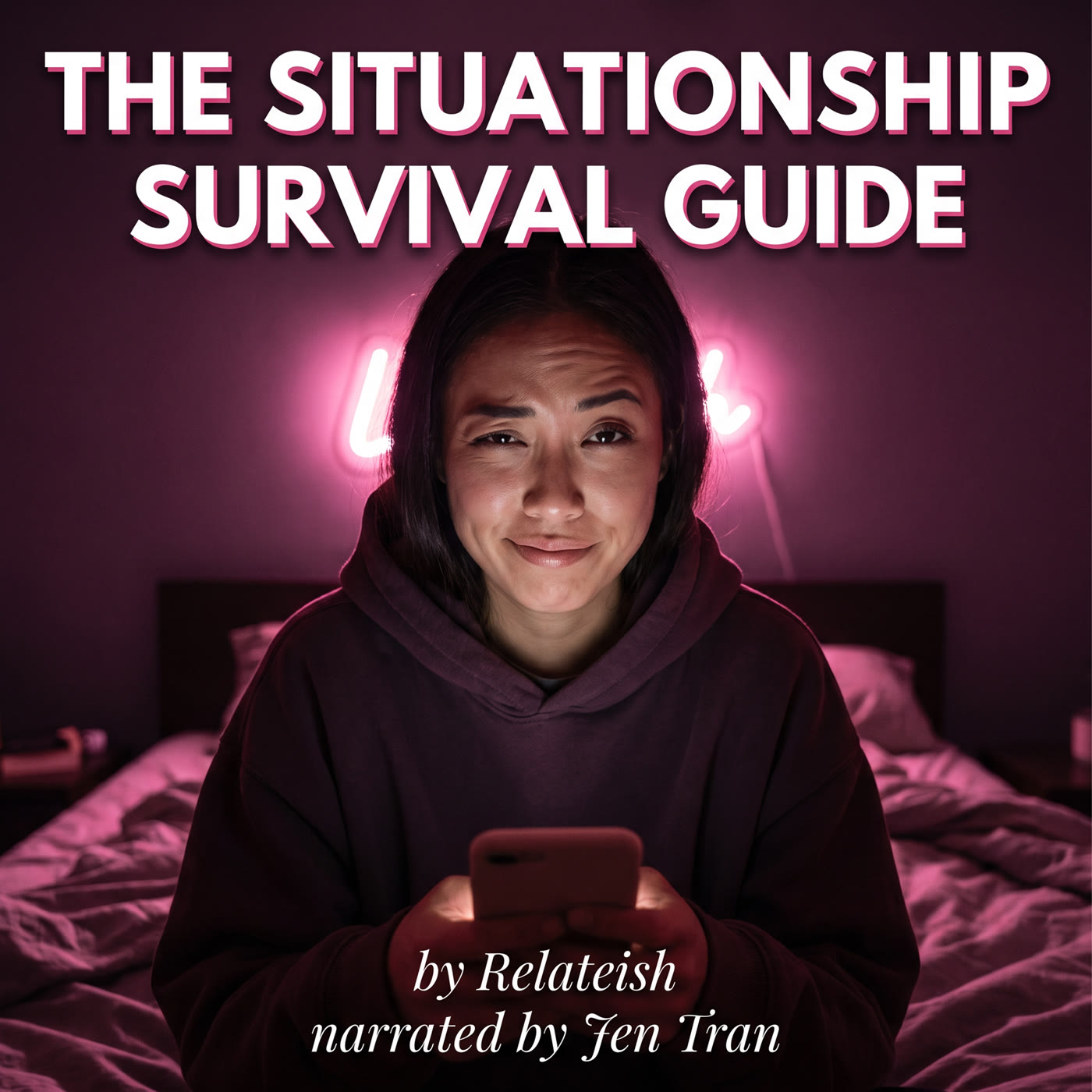
It's nearly one in the morning and you're lying in their bed while they sleep. It was a lovely evening. Takeout on the couch, two episodes of the show you only ever watch together, a laugh so hard you had to put your fork down.
And now you're awake, looking at the ceiling, doing the sum again. Eight months. Most weekends. A key, though they called it a spare in case they get locked out. Your toothbrush isn't here; it's in your bag. You've never met their friends. You know the neighbor's cat by name. You don't have a name for what you are.
You're not being dramatic. Something real is happening, and it has a shape.
What makes it a situationship
Plenty of couples skip the formal conversation and are obviously together. A situationship is a particular combination: real intimacy, physical and often emotional; enough regularity that it isn't a fling; and a deliberate lack of definition, usually kept in place by one person more than the other.
You get the experiences of a relationship without its agreements. Are we exclusive? Will we meet each other's people? When I'm ill, will you come round? Those blanks don't stay empty. Each of you fills them in privately, often differently.
It's so common now for reasons that have nothing to do with you. There's always another profile one swipe away, so the pressure to choose is low. Asking "what are we?" has a reputation for being needy, so nobody asks. And it creeps: it's too early to raise it, until one day it seems too late.
The stranger's summary
Picture a kind, sharp stranger who has watched the two of you for eight months. They can't read your mind or hear your hopes. They can only see what happens. How would they describe it in four or five plain sentences?
She sees him most weekends. They stay over. They've never been seen with each other's friends. He's said he doesn't want a label. She hasn't said what she wants.
Hope takes small, real things and builds them into evidence of a relationship that was never agreed.
The summary isn't there to make you feel bad. It separates what is happening from what you hope is happening, because in a situationship the two drift apart easily. And many people find the last line stops them: they've spent months analysing what the other person wants, and have never once said out loud what they want.
The three kinds
From the inside, every situationship feels roughly the same: lovely moments, unclear status, a low hum of wondering. Underneath, most are one of three kinds.
- On the way to something. Both of you are moving towards a relationship. It's undefined because it's early, or because of a specific obstacle you both know about and that has an end. Things keep changing: more time, more people, more future.
- The holding pattern. The most common, and the most confusing. They like you and aren't pretending. But nothing moves. It stays exactly this pleasant, month after month, like a plane circling an airport. Ask, and there's always a reason. The reason changes. The situation doesn't.
- The placeholder. The hardest to say. They're with you while waiting for something else, though they may not know it themselves. The tell: things go backwards when you get close. A lovely weekend, then three quiet days, as if the distance has to be restored.
Almost nobody in the second or third kind believes, from the inside, that they're in it. The good moments are too good. So you need something more reliable than a feeling.
The direction check
Compare four things at about month two with how they are now.
- Time. Do you see each other more, the same, or less? Daylight and weekdays, or mostly late evenings?
- People. Have you met anyone in their life since month two? Have they met anyone in yours?
- Future. When they talk about what's coming up, a trip, a wedding, the holidays, are you in the sentence?
- Effort. Who makes the plans, travels, texts first? Has that changed?
If most are growing, you may well be in the first kind. If they've been flat for months, it's very probably a holding pattern. If some are shrinking, or lurch warm and cold, the placeholder is worth considering honestly.
Two voices will start up. One says these things take time, they're a slow burner. The other says slow burners still burn, and something should be warmer by now. You don't have to silence the first one. But let the second one finish its sentences.
The first kind is real. Some of the happiest couples you know began with a long, vague stretch. Ambiguity that stays exactly the same for months, though, is information.
The sentence that settles it
There's a quick test that usually tells you which kind you're in. Finish this sentence: We're not together yet because…
Two rules. First, you can only fill the gap with things they've actually said or done. Not what you suspect, not what a friend thinks, not what an article said about people who've been hurt. Their words, their actions. Second, look hard at the word yet. Did they ever say or do anything that put it there, or did you add it?
If the sentence ends with something specific that has an end, because they're finishing their divorce and want to do this properly once it's final in the summer, you may well be in the first kind. If it ends with something vague that never expires, because they don't do labels, because work is crazy, it's probably a holding pattern. And if you can't honestly use yet at all, the placeholder is worth considering.
Some people find the honest version isn't about the other person at all: We're not together yet because I've never said I want to be. That's worth noticing too. A situationship is often kept going by one person's reluctance and the other person's silence.
The Situationship Survival Guide gives you the one sentence that usually settles which kind you're in, how to ask without shrinking, and how to leave, or stay, with your eyes open.